Starbucks is facing a proposed class-action lawsuit over an unusual question: Can a drink be called “sugar-free” when Starbucks’ own nutrition information says it contains as much as 21 grams of sugar?
A federal lawsuit filed Oct. 2 in Seattle alleges that Starbucks improperly marketed eight protein beverages using “Sugar-Free” in their names even though the finished drinks contain naturally occurring sugar from milk.
Starbucks disputes the allegations and says it has been transparent about what’s actually in the drinks.
Here’s what customers should know.
The Drinks Aren’t Necessarily Free of Sugar
At the center of the lawsuit are hot and iced versions of four Starbucks beverages:
- Sugar-Free Vanilla Protein Latte
- Sugar-Free Caramel Protein Latte
- Sugar-Free Vanilla Protein Matcha
- Sugar-Free Caramel Protein Matcha
The issue isn’t necessarily Starbucks’ sugar-free syrups.
Instead, the lawsuit points to the milk.
Starbucks’ Protein-boosted Milk is dairy-based, and dairy milk contains lactose — a naturally occurring sugar.
That means a beverage can have zero grams of added sugar while still containing a significant amount of total sugar.
Starbucks’ own nutrition information makes that distinction surprisingly clear.
A grande Sugar-Free Vanilla Protein Latte, for example, is listed with 15 grams of total sugar and 230 calories. Starbucks describes the drink as having “No Added Sugar.”
The grande Sugar-Free Caramel Protein Matcha contains 16 grams of total sugar while listing zero grams of added sugar.
And according to the lawsuit, some venti versions contain between 13 and 21 grams of sugar.
Why The Words “Sugar-Free” Matter
That’s where the legal fight gets interesting.
Federal regulations generally permit a food to be described as “sugar free,” “no sugar,” “zero sugar” or similar terms only when it contains less than 0.5 grams of sugar per serving and per reference amount customarily consumed.
The regulations distinguish that claim from phrases such as “no added sugar.”
The plaintiffs argue Starbucks crossed that line by putting “Sugar-Free” directly into the names of beverages that contain considerably more than 0.5 grams of total sugar.
The lawsuit also alleges Starbucks failed to include certain calorie-related disclosures required when making a sugar-free claim.
Those are allegations, however — not findings by a court.
Starbucks Says The Lawsuit Has No Merit
Starbucks is pushing back.
“We believe these claims have no merit,” a Starbucks spokesperson told ABC News.
The company said it has consistently provided customers with information about the protein drinks, sugar-free options, customization choices and nutritional content through its menus, website, app and other marketing materials. Starbucks said it intends to vigorously defend itself.
And Starbucks does publicly disclose the sugar.
For example, its website currently lists 16 grams of sugar in a grande Sugar-Free Caramel Protein Matcha. The description emphasizes that the beverage contains no added sugar and uses sugar-free caramel syrup.
Similarly, an iced grande Sugar-Free Vanilla Protein Latte contains 9 grams of total sugar, according to Starbucks, despite containing no added sugar.
So this isn’t a case where laboratory testing allegedly uncovered hidden sugar Starbucks never disclosed.
The lawsuit instead centers on whether the name of the drink itself — specifically the words “Sugar-Free” — is legally misleading despite the more detailed nutritional information being available elsewhere.
Starbucks Launched The Protein Drinks Last Year
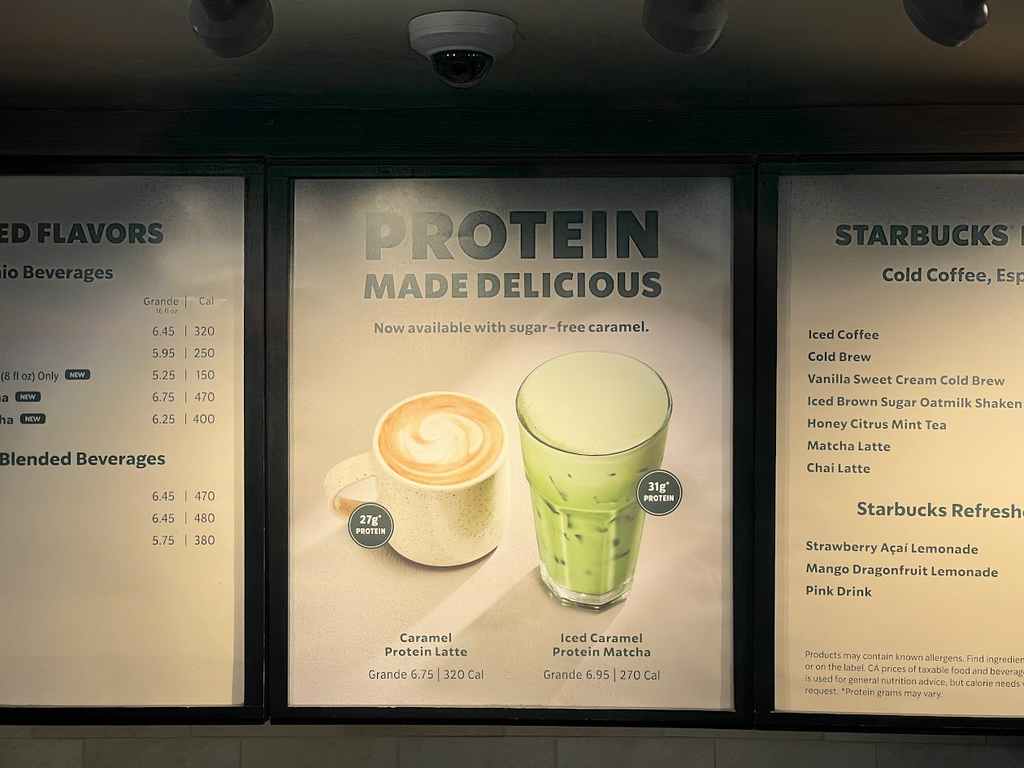
Starbucks introduced its protein beverage lineup in September 2025 as part of its effort to offer customers more protein-focused and customizable drinks.
The beverages use Protein-boosted Milk made with dairy milk and whey protein isolate.
Starbucks says its protein lattes and other drinks made with Protein-boosted Milk generally contain between 27 and 36 grams of protein.
The newer sugar-free varieties were clearly designed to appeal to customers who want protein without the added sugar found in many flavored coffeehouse beverages.
But the lawsuit argues there is an important difference between “sugar-free” and “no added sugar.”
A customer seeing “Sugar-Free Vanilla Protein Latte” on a menu could reasonably interpret that phrase to mean the finished latte contains essentially no sugar, the plaintiffs contend.
Starbucks’ position is that customers have been given clear nutritional information and that its drinks use sugar-free flavoring without added sugar.
What Happens Next
The lawsuit is seeking unspecified damages and asks the court to prevent Starbucks from using “sugar-free” labeling on products that don’t satisfy the applicable federal requirements.
Because this is a newly filed proposed class action, none of the plaintiffs’ claims have been proven, and the case could ultimately be dismissed, settled or proceed further through the courts.
For Starbucks customers, though, there’s already a useful takeaway.
“No added sugar” and “sugar-free” don’t necessarily mean the same thing.
When ordering one of Starbucks’ protein beverages, customers watching their sugar intake may want to look at the total sugar number in the Starbucks app or on Starbucks.com rather than relying only on the drink’s name.
In this case, Starbucks itself lists total sugar in several drinks carrying “Sugar-Free” in their names — and whether that naming practice is permissible is now headed into federal court.
Green Mermaid Review is independent and not affiliated with Starbucks. Our editorial standards · Report an error